In the video (“Seer Stones and the Translation of the Book of Mormon”), Mason Allred interviews Dr. Mark Ashurst-McGee of the Joseph Smith Papers Project concerning “the various historical accounts of the Book of Mormon translation process.”
Showing posts with label Seer Stones. Show all posts
Showing posts with label Seer Stones. Show all posts
February 25, 2021


Seer Stones

Historical sources suggest that effective use of the instruments required Joseph to be at peace with God and his fellowmen, to exercise faith in God, and to exert mental effort (CHC 1:128-33). Otherwise, little is said authoritatively about their operation. Occasionally, people have been deceived by trying to use stones to receive revelation, the best-known latter-day example in the Church being Hiram Page (D&C 28:11-12).
While useful in translating and receiving revelation, seer stones are not essential to those processes. Elder Orson Pratt reported that Joseph Smith told him that the Lord gave him the Urim and Thummim when he was inexperienced as a translator but that he later progressed to the point that he no longer needed the instrument ("Two Days' Meeting at Brigham City," Millennial Star 36 [1874]:498-99).
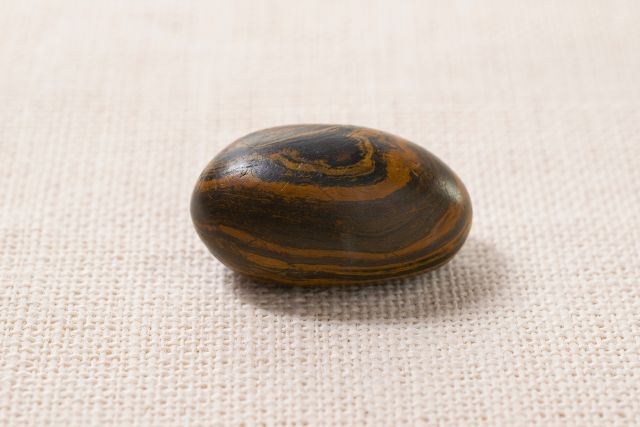 |
| One of Joseph Smith's Seer Stones |
Urim and Thummim
From time to time, as his purposes require, the Lord personally, or through the ministry of appointed angels, delivers to chosen prophets a Urim and Thummim to be used in receiving revelations and in translating ancient records from unknown tongues. With the approval of the Lord these prophets are permitted to pass these instruments on to their mortal successors.
A Urim and Thummim consists of two special stones called seer stones or interpreters. The Hebrew words urim and thummim both plural, mean lights and perfections. Presumably one of the stones is called Urim and the other Thummim. Ordinarily they are carried in a breastplate over the heart. (Ex. 28:30; Lev. 8:8.)
Because of the sacred nature of these holy instruments they have not been viewed by most men, and even the times and circumstances under which they have been held by mortals are not clearly set forth. Undoubtedly they were in use before the flood, but the first scriptural reference to them is in connection with the revelations given the Brother of Jared. (Ether 3:21-28.) Abraham had them in his day (Abra. 3:1-4), and Aaron and the priests in Israel had them from generation to generation. (Ex. 28:30; Lev. 8:8; Num. 27:21; Deut. 33:8; 1 Sam. 28:6; Ezra 2:63; Neh. 7:65.) There is no record that Lehi brought a Urim and Thummim to this continent, but King Mosiah had one prior to the discovery of the Book of Ether, and it was handed down from prophet to prophet. (Omni 20-21; Mosiah 8:13-19; 21:26-28; 28:11-20; Alma 63:12; Ether 4:1-7.)

Joseph Smith received the same Urim and Thummim had by the Brother of Jared for it was the one expressly provided for the translation of the Jaredite and Nephite records. (D. & C. 10:1; 17:1; Ether 3:22-28.) It was separate and distinct from the one had by Abraham and the one had by the priests in Israel. The Prophet also had a seer stone which was separate and distinct from the Urim and Thummim, and which (speaking loosely) has been called by some a Urim and Thummim. (Doctrines of Salvation, vol. 3, pp. 222-226.)
President Joseph Fielding Smith, with reference to the seer stone and the Urim and Thummim, has written: "We have been taught since the days of the Prophet that the Urim and Thummim were returned with the plates to the angel. We have no record of the Prophet having the Urim and Thummim after the organization of the Church. Statements of translations by the Urim and Thummim after that date are evidently errors. The statement has been made that the Urim and Thummim was on the altar in the Manti Temple when that building was dedicated. The Urim and Thummim so spoken of, however, was the seer stone which was in the possession of the Prophet Joseph Smith in early days. This seer stone is now in the possession of the Church." (Doctrines of Salvation, vol. 3, p. 225.)
When Moroni first revealed to the Prophet the existence of the gold plates, he also said "that there were two stones in silver bows - and these stones, fastened to a breastplate constituted what is called the Urim and Thummim - deposited with the plates; and the possession and use of these stones were what constituted 'seers' in ancient or former times; and that God had prepared them for the purpose of translating the book." (Jos. Smith 2:35, 59, 62.) Ammon said of these same stones: "The things are called interpreters, and no man can look in them except he be commanded lest he should look for that he ought not and he should perish. And whosoever is commanded to look in them, the same is called seer." (Mosiah 8:13; 28:13-16.) The existence and use of the Urim and Thummim as an instrument of revelation will continue among exalted beings in eternity. From the inspired writings of the Prophet we learn that angels "reside in the presence of God, on a globe like a sea of glass and fire, where all things for their glory are manifest, past, present, and future, and are continually before the Lord. The place where God resides is a great Urim and Thummim. This earth, in its sanctified and immortal state, will be made like unto crystal and will be a Urim and Thummim to the inhabitants who dwell thereon, whereby all things pertaining to an inferior kingdom, or all kingdoms of a lower order, will be manifest to those who dwell on it; and this earth will be Christ's. Then the white stone mentioned in Revelation 2:17, will become a Urim and Thummim to each individual who receives one, whereby things pertaining to a higher order of kingdoms will be made known." (D. & C. 130:6-11.)
Subscribe to:
Posts (Atom)